It’s been three whole years since I wrote about my favorite games of the year. Today, that changes. Why has it been so long? Well, these posts are about games that came out in one calendar year, and the last few years I just haven’t played a large enough volume of titles to justify it.
In 2024, I played a handful of gigantic games—Persona 3: Reload, Unicorn Overlord, and Dragon Age: Veilguard. Those three, combined with Destiny: The Final Shape, took up hundreds of hours of my time and pushed some other 2024 titles into 2025. And in 2023, a lot of my free time went into reading a bunch of books.
But here we are this year! I finally got my new games played north of the double-digit mark! And that would have been higher, too, had I not finally finished Baldur’s Gate 3 (which slaps) and replayed 13 Sentinels: Aegis Rim (one of my favorites ever). Without further ado, here we go:
Honorable Mention: Kirby Air Riders

I never in a million years would have guessed that the 2003 Nintendo Gamecube cult classic racing game Kirby Air Ride would have gotten a sequel more than two decades later. But it did, and I almost lost my mind when I saw its announcement trailer in a Nintendo Direct.
Fortunately, the sequel is a banger. It’s Kirby Air Ride, but more: it adds a fourth mode, online play, different characters with different special abilities, unlockable customizations, more vehicles (erm, stars, excuse me), more tracks. Gameplay remains fast, chaotic, and just a little weird.
Kirby Air Riders feels like a little bit of a throwback to a simpler time without paid DLC, microtransactions, live service games, and the like. It’s a video game, in the purest sense of the word. I’m glad it’s a thing.
Bronze Medal: Hades 2

Supergiant Games is sort of like the video game version of Pixar: in a world of infinite sequels, both built their reputation on the ability to repeatedly create interesting, creative, and unique projects. But the siren song of sequels wails nonetheless, and eventually it made creative and financial sense to put out a sequel.
Hades 2 is more Hades, and it is therefore a near-perfect action game. This time around, the sequel focuses on Melinoe, sister of the first game’s protagonist. The weapons are fantastic to use and upgrade. It is addictive, satisfying, and it has that “one more run” energy that characterizes a good roguelike.
Truly, Hades 2 is a masterpiece in every way except the narrative, which fell flat to me at the conclusion of the main story and at times throughout. But I don’t ding it too much for that; the game has to come up with a reason for you to continue going on runs, and besides the original game covered so much ground so completely that it impacted the sequel.
What’s Supergiant going to do next? I’ll be fascinated to see.
Silver Medal: Dispatch
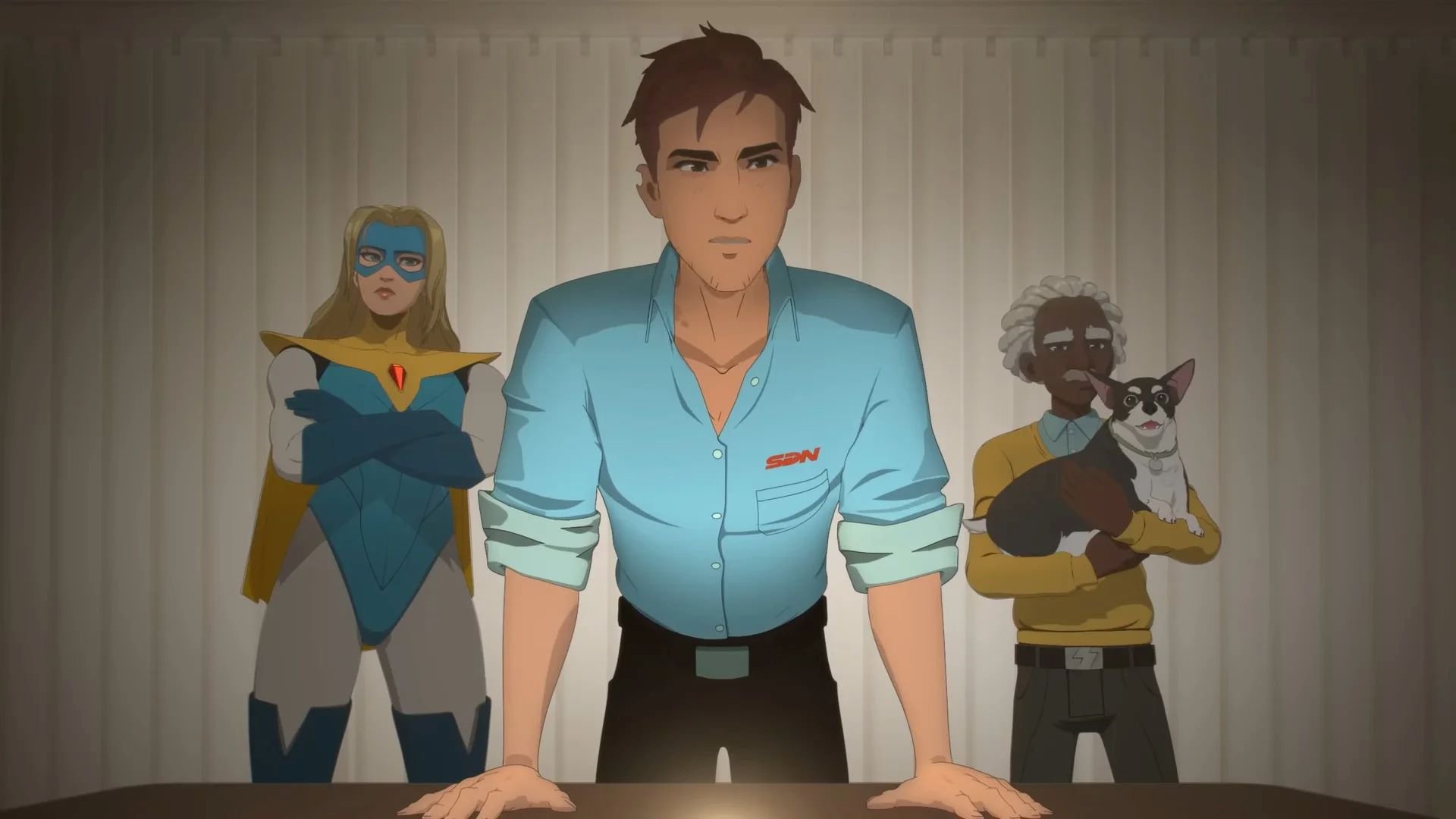
Superhero fatigue is real, but some projects can outmaneuver it by offering a fresh viewpoint or interesting scenarios. Dispatch offers both, and I did not expect to like it as much as I did, but I did and that’s why it is here.
Dispatch began its life as an animated TV series before it ended up as a video game. It’s paced like a TV show, it’s split into discrete episodes, and it carries a lot of the vibes of an HBO Max animated production. But that also means that it has a level of narrative polish that feels good.
You, as Robert Robertson III, fill the role as a superhero dispatcher, sending your team of delinquent former villains to save cats from trees, provide personal security to government figures, make speeches at schools…a whole variety of things. It is this real time strategy component that helps elevate the experience and reinforce the story going on around you.
In true story-driven game fashion, the decisions you make affect both the strategic gameplay and story itself. And with each episode being half an hour to 45 minutes long, you can easily replay the game to have a different experience. Which I did, because I like this one.
Gold Medal: Clair Obscur: Expedition 33
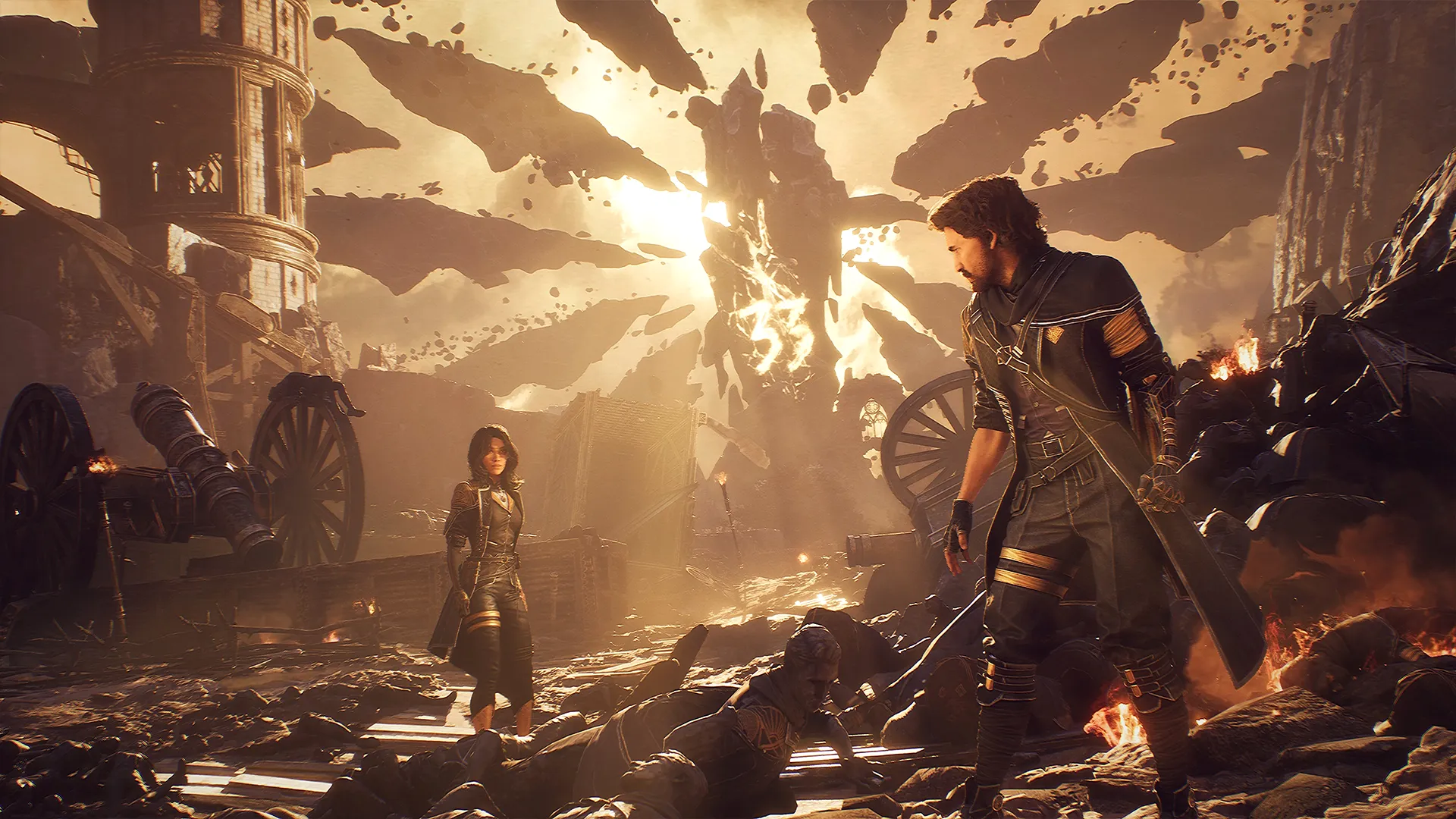
I remember watching the first trailer for this game when it was announced and thinking, “Yeah, this game is gonna be good and I can’t wait to play it.” Sure enough, the game was good and I loved it. So too did everyone else, to the extent that I almost feel self-conscious for joining the crowd here.
But Expedition 33 is truly that game. A lot of people start talking about it by gushing about its narrative, but I think E33’s superpower is how fun it is to play and how detail-oriented it is. Combat is engaging and deep. Party customization is thoughtful and varied. The rewards economy is smart and nothing feels broken or useless. The use of an overworld and individual dungeons is perfectly handled.
Then, of course, the game is visually distinct and beautiful. Its world is creative and unique. It has one of the most striking soundtracks in gaming history, which is truly not a hyperbole. The narrative twists and turns like a Twizzler driving a motorcycle. E33 doesn’t take itself too seriously, too, and is legitimately funny.
And at the core of the game is an all-time cast of characters and character writing. At one point, you have a conversation with a character about a loved one of theirs, and the topic of the afterlife comes up. That character responds beautifully: if there is an afterlife, they’ll be together again. And if not, they’ll be together, too, just in a different way.
Why is everyone picking Expedition 33 as Game of the Year? Because it is the best game of the year. It’s that simple.